

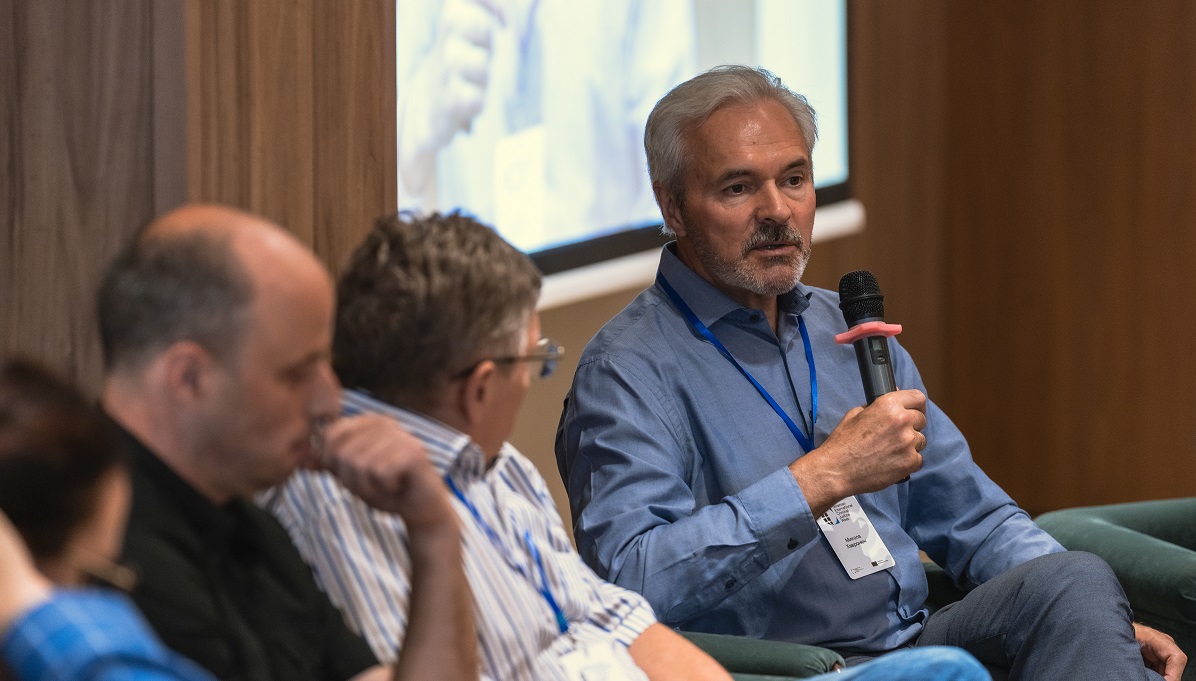

The Master’s program “Anti-Corruption Studies” at the National University of Kyiv-Mohyla Academy is Ukraine’s first and unique educational program, which trains a new generation of specialists to effectively fight corruption in Ukraine.
We spoke to Mykola Khavronyuk, Doctor of Law, Professor at the National University of Kyiv-Mohyla Academy, Honoured Lawyer of Ukraine and lecturer on our course “Legal Foundations and Institutional Mechanisms for Preventing Corruption”, who shared his vision for the programme and explained how students’ knowledge can help transform the country and tackle corruption right now.
– Mr Mykola, what makes your course special for students on the programme?
– Upon completion of the course, students will have gained a considerable amount of knowledge regarding:
- what corruption is and how it differs from related phenomena – such as various forms of abuse, fraud, etc.;
- the relevant legislation and Ukraine’s international obligations in the field of corruption prevention;
- the main measures for preventing corruption and who implements them, etc.
Students also acquire specific skills. In particular, these include the ability to:
- critically assess, correctly understand and interpret the provisions of anti-corruption legislation;
- analyse statistics and case law relating to corruption and corruption-related offences;
- apply alternative methods of resolving legal conflicts arising between a corruption offender, on the one hand, and the state, society and citizens, on the other;
- apply measures to remedy the consequences of corruption offences.
All of this could be useful if they decide to work for the NACP or NABU, or to become anti-corruption officers or whistleblowers, or to work on anti-corruption issues within a civil society organisation involved in analysis or advocacy, and so on.
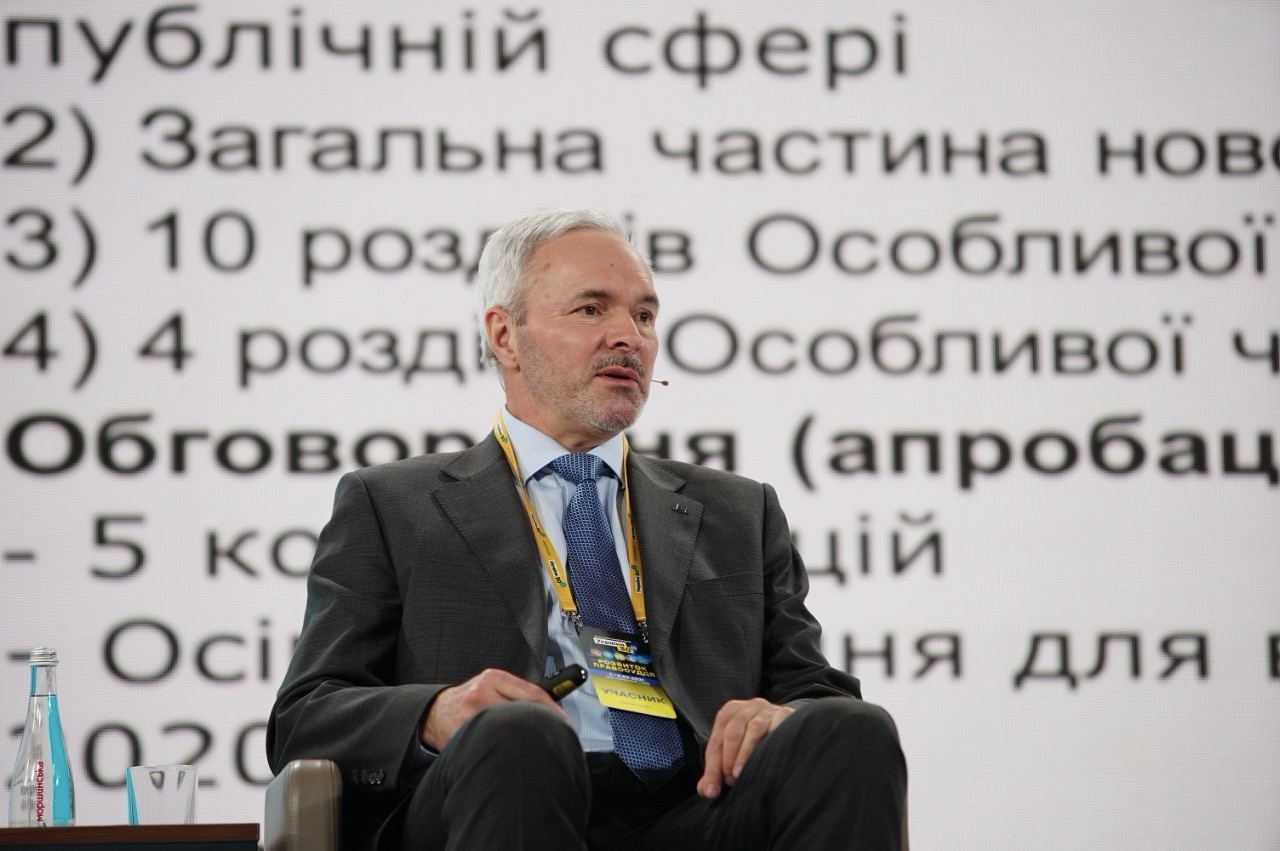
– Why do you think it is important to teach students how to influence anti-corruption policy during their studies?
– Students must fully understand the dangers of corruption, take a firm stand against it, and encourage those around them to do the same – this helps to expand the ranks of Ukrainians who refuse to accept that certain individuals are systematically stealing our shared funds and property, and our very future, right before our eyes. How can we possibly put up with this?!
During the course, Mr Mykola explained that one of his lectures was specifically devoted to the ways in which society can influence those in power. He sought to demonstrate to the students that: “Without such influence, the political will to tackle corruption either fails to emerge or remains weak.”
– Which of the students’ results or achievements have impressed you the most this year?
– This year, I asked the students to complete three written assignments. I was impressed by how seriously the students took these tasks, and I am grateful that they did not simply send me dry academic texts, but were very open and demonstrated their honest attitude towards the issue of corruption and how they are trying to mitigate its negative impact.
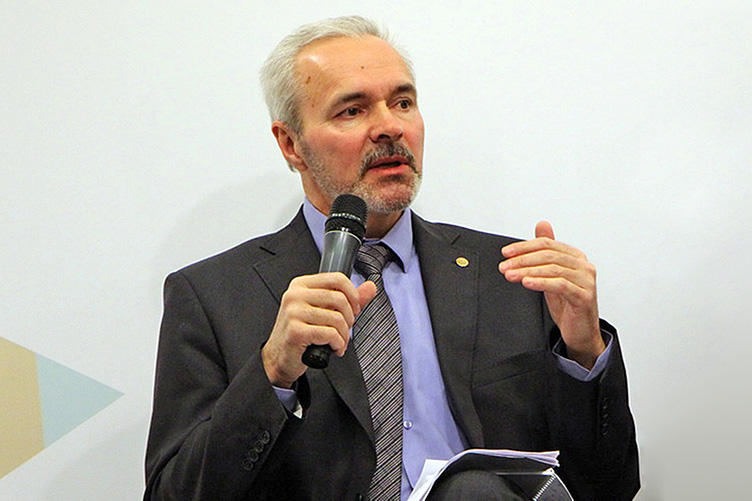
Graduates of the Anti-Corruption Studies programme work in Ukrainian and international organisations, government bodies and the civil society sector, gaining practical experience to help bring about anti-corruption reforms in Ukraine.
Our experienced programme lecturers, such as Mr Mykola Kharvoniuk, inspire students with their own experiences and help them find their way in the field of anti-corruption.
The Master’s Program “Anti-Corruption Studies” is supported by the International Renaissance Foundation. The material represents the position of the authors and does not necessarily reflect the position of the International Renaissance Foundation.